What if the reason two Lake Forest listings a mile apart price so differently has almost nothing to do with the houses themselves?
Start with a fact most people who have lived here for years have never noticed: Lake Forest has two Metra stations, and they share the exact same name. Not similar names. The same name, printed on two different platforms, serving two different rail lines that end up in two different parts of downtown Chicago. The Union Pacific North line stops in East Lake Forest and rolls into Ogilvie Transportation Center. The Milwaukee District North line stops in West Lake Forest and terminates at Union Station. Two stations. One city. Two commutes that never touch.
That coincidence turns out to be a decent stand-in for the whole market. "Lake Forest" gets talked about as a single place with a single price tag, but the city functions more like two adjacent markets that happen to share a name, a school system, and a city hall. If you're comparing a listing on one side to a listing on the other, you're not just comparing square footage. You're comparing two different regulatory environments, two different housing eras, and two different rides into the city.
Three Sources, Three Numbers, One Season
Pull Lake Forest's pricing from a few different places this month and the numbers won't agree with each other, and that disagreement is itself the story. As of August 2026, one national portal puts the median list price at $1.5 million, with homes moving in a median of 28 days, a pace 15 percent faster than the same month a year earlier. Look at a different portal's trailing three-month window ending in May 2026, and the median sale price reads $1.3 million, down 3.4 percent year over year, with days on market averaging 49. A third estimate, dated at the end of June 2026, puts the typical home value closer to $1.01 million, up nearly 5 percent for the year.
Three sources, three overlapping time windows, three numbers that don't land anywhere close to each other. That's not measurement error. It's what happens when a single municipal boundary contains two different housing stocks, and every algorithm doing the averaging blends them together without telling you it happened. Local brokerages tracking the broader Lake County luxury tier have also noted that homes priced above $3 million set new records in the first quarter of 2026, which pulls the high end of any citywide average upward even as the middle of the market cools. A median or an average calculated across both halves of Lake Forest is technically accurate and still tells you almost nothing about what a specific number buys on either side of town.
The Same Name, Two Different Downtowns
The train split isn't just trivia. It's the clearest physical marker of where the city actually divides. If your job takes you to the Loop near Ogilvie, the Union Pacific North line out of East Lake Forest is your daily reality. If your office sits closer to Union Station, the Milwaukee District North line out of West Lake Forest gets you there instead. Neither commute is objectively better. They're simply different, and which one matters to you probably has more bearing on which side of town makes sense than anything printed on a listing sheet.
This is the kind of detail that never shows up in a search filter. Buyers comparing homes across Lake Forest tend to ask about square footage, lot size, and school assignment, all reasonable questions. Almost nobody asks which Metra line they'll actually be riding twice a day, and it's one of the few variables in this market that won't change no matter how much work you put into the house.
The Regulatory Line You Won't See on a Listing Sheet
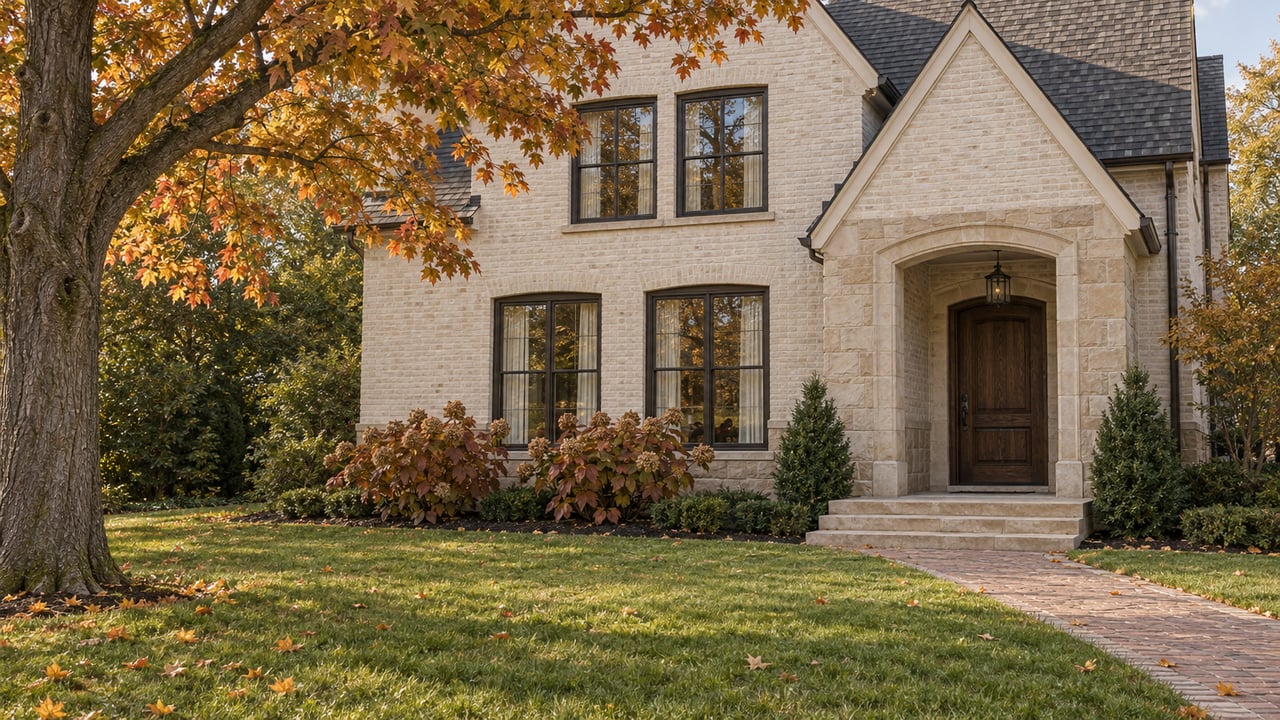
Here's the part that catches buyers off guard after they've already fallen for a house. The City of Lake Forest says its Historic Preservation Ordinance, adopted in 1998, established five Local Historic Districts; the city's districts and properties page lists the East Lake Forest Historic District, the Green Bay Road Historic District, the Vine/Oakwood/Green Bay Road Historic District, the Meadowood Dairy Historic District, and the Grove School Historic District. Several of these, including the district literally named East Lake Forest, sit along the eastern half of the city near the Union Pacific North line and Market Square. If you buy inside one of these boundaries, exterior changes, additions, and sometimes even paint choices can require review by the city's Historic Preservation Commission before you touch them.
That's not a knock against East Lake Forest. It's the tradeoff for buying into a place like the Meadowood Dairy Historic District, where the North Cottage, Milk House, and other structures designed by architect Ralph Varney for the Clifford Milton Leonard farm still stand, or into an enclave like Villa Turicum, long associated with the estate architecture the east side is known for. Homes here were built by architects whose names carry weight in Lake Forest's own history, and the preservation rules exist precisely because the city wants that character kept intact.
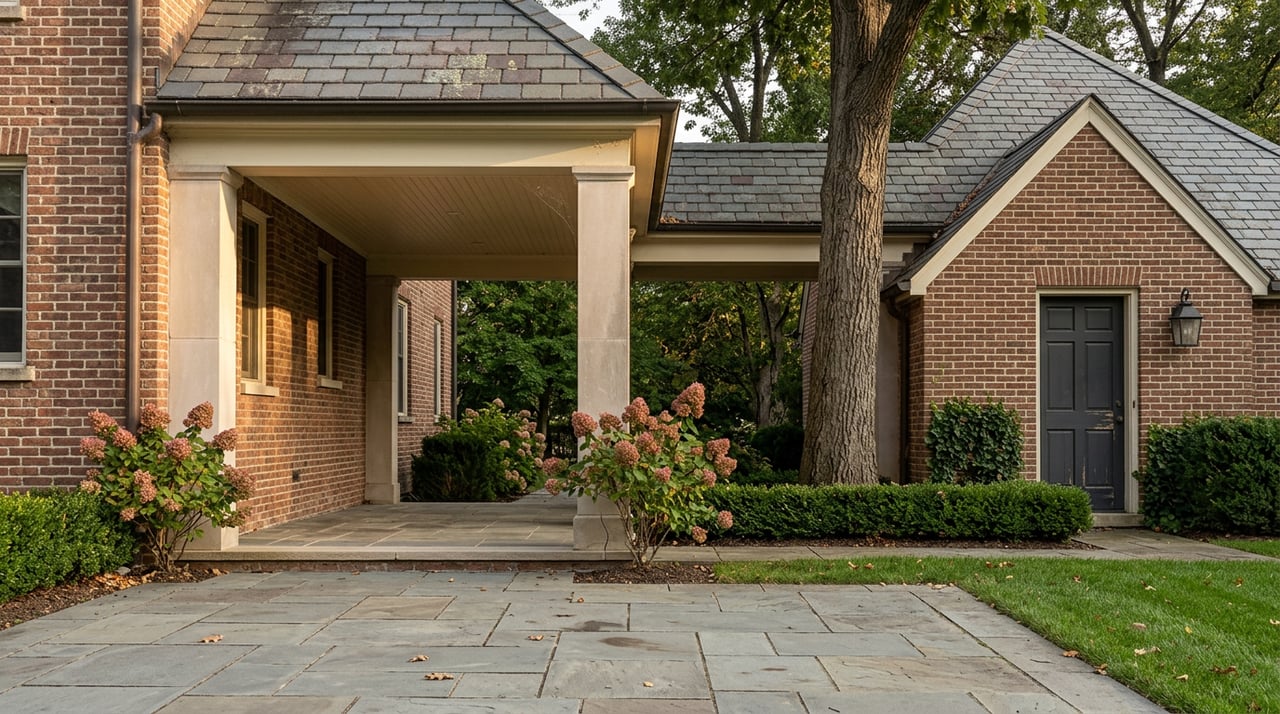
West Lake Forest carries a different kind of history. Conway Farms, one of its established subdivisions, was built mostly around 1981, which means the housing stock skews newer. It's worth noting that even within the walkable historic core near Market Square, not everything sits inside a preservation boundary. The Kelmscott Park development brought new-construction single-family homes within a short walk of the Metra line and Market Square itself, proof that the preservation overlay follows specific district lines on a map rather than a blanket rule for "the east side."
Here's how the pieces line up side by side:
| East Lake Forest | West Lake Forest | |
|---|---|---|
| Metra line | Union Pacific North, to Ogilvie Transportation Center | Milwaukee District North, to Union Station |
| Typical housing era | Estate-era construction from the 1920s and earlier, plus later infill | Subdivisions built mostly from the 1970s and 80s forward |
| Preservation overlay | Five Local Historic Districts cover much of this side; exterior changes may need Commission review | Largely outside the local historic district boundaries |
| Notable named areas | Villa Turicum, Meadowood Dairy Historic District, Market Square core | Conway Farms |
What This Means When You're Comparing Two Listings
None of this makes one side of Lake Forest the "right" choice. It means the comparison buyers are actually running in their heads, price per square foot against price per square foot, isn't quite the comparison the market is set up to reward. A dollar spent on a Meadowood Dairy cottage buys architectural pedigree and a preservation process that protects your neighbors' character along with your own, at the cost of some flexibility if you ever want to change the exterior. A dollar spent in Conway Farms buys a newer structure and fewer approval steps, at the cost of the century-old detailing that draws people to the east side in the first place.
The train lines matter for a more practical reason. If you're relocating for a job with a fixed office location, the line that actually gets you there without a transfer is worth weighing before the house itself, because it's the one variable in this whole equation that no renovation, no landscaping, and no amount of house-hunting persistence will change.
A Few Questions Worth Asking Before You Compare Listings
Does the historic preservation rule apply everywhere on the east side? No. It applies specifically within the boundaries of the five Local Historic Districts on the city's own maps. A property just outside those lines, even in a historically minded part of town, may not carry the same review requirement.
Is one Metra line faster than the other? Both lines run into downtown Chicago, just at different stations. Which one serves you better depends entirely on where your job is, not on which one is objectively quicker.
Do East and West Lake Forest share the same schools? Lake Forest High School serves the city as a whole, along with parts of neighboring Lake Bluff, while several elementary schools are distributed across the district. Specific school assignment is worth confirming for any individual address rather than assuming by side of town.
If you're trying to figure out what a specific budget actually buys on either side of Lake Forest, that's a conversation better had with someone who tracks both markets closely rather than a portal averaging them into one number. Sondra Douglass has spent years working both sides of this city and can walk you through what a given price point looks like depending on which train you'll be riding. Request a home valuation to start that conversation with real numbers instead of a citywide average.
This article is general information, not legal, tax or financial advice. Consult a qualified professional about your situation.