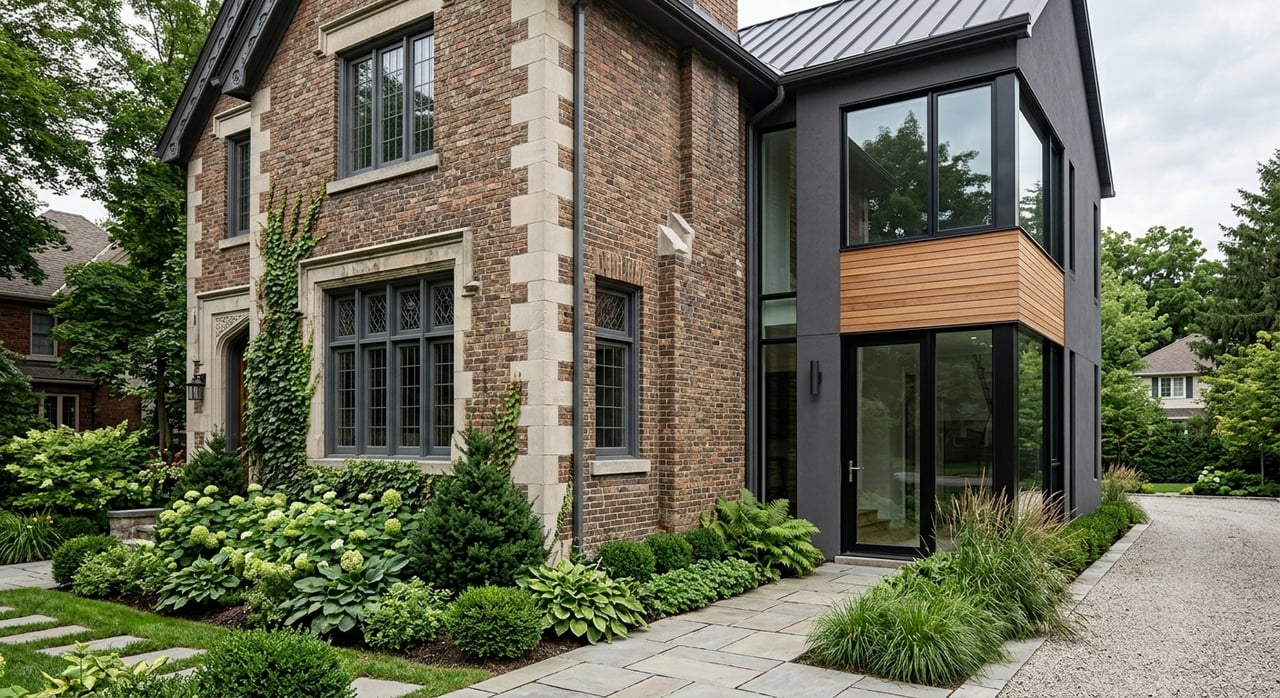
Are you torn between the clean appeal of a brand-new home and the charm of an older one in Libertyville? You are not alone. In a village where housing options span downtown historic properties, mid-century homes, and limited new construction, the right choice often comes down to how you want to live, what updates you are comfortable taking on, and which trade-offs matter most to you. This guide will help you compare Libertyville new construction vs historic homes in a practical, local way. Let’s dive in.
Libertyville Housing Has More Older Homes
If you are starting your search in Libertyville, it helps to know the local housing mix. This is not a market filled with brand-new inventory. CMAP data shows Libertyville has a median year built of 1976, with just 4.0% of homes built in 2010 or later.
That matters because most buyers here are not choosing between large numbers of new builds and century-old homes. Instead, you are often comparing newer or recently built homes with older properties that may be mid-century, late-20th-century, or, in some cases, part of the village’s historic core.
The largest share of homes falls in the 1970 to 1989 range at 42.5%, followed by 1940 to 1969 at 26.8%. Only 9.3% of homes were built before 1940. So when people say “older home” in Libertyville, they may mean something quite different from a formally historic property.
New Construction in Libertyville
New Construction Is Limited
New construction exists in Libertyville, but it is a small slice of the housing stock. That limited supply can make newer homes feel especially appealing if you want modern finishes, current building standards, and fewer near-term projects.
Village planning also points to added residential density being discussed near the Downtown Metra station and School Street. For you, that means newer housing opportunities may appear in or near more central locations, not only on the edges of town.
What New Homes Usually Offer
One of the biggest reasons buyers choose new construction is predictability. Newer homes often come with updated electrical, plumbing, heating, and cooling systems, which can reduce the need for immediate repairs or retrofits.
Energy performance is another major plus. According to ENERGY STAR, certified new homes are at least 10% more energy efficient than homes built to minimum code. ENERGY STAR also connects this performance to features like quality-installed insulation, high-performance windows, and a well-sealed building envelope.
That can translate into benefits you feel every day, including improved comfort and potentially lower utility bills. It may also mean fewer maintenance concerns in the near term compared with a home that needs air sealing, insulation updates, or HVAC replacement.
What to Keep in Mind With New Construction
New construction is not always the easy path people imagine. In Libertyville, permits are required for building, electrical, plumbing, heating, and air-conditioning work, and fees are based on construction cost.
The village also notes that a cash bond of $500 to $5,000 may be required. On vacant-lot construction, school and park donations may also be triggered. If you are planning to build or heavily customize, those local requirements are part of the process.
You may also find that the word “new” covers different situations. Some homes are fully custom builds, while others are newer infill properties or recently completed homes in select pockets. That is why it helps to look beyond the finish level and ask about construction quality, layout, lot size, and location.
Historic and Older Homes in Libertyville
Not Every Older Home Is Historic
This is one of the most important distinctions in Libertyville. Older does not automatically mean historic. The village has a formal Downtown Historic District, but the broader housing stock includes many older homes that are not officially designated historic properties.
Libertyville’s Downtown Historic District became the village’s first Historic District and was listed on the National Register of Historic Places on April 25, 2025. The village says the downtown survey assessed about 350 structures in an area bounded by the Metra tracks, 1st Street, Route 176, and Brainerd Avenue.
For you as a buyer, that means age alone does not tell the full story. A home may be older and full of character without falling inside the formal historic district or being subject to the same review standards.
Why Buyers Love Older Homes
Older homes often stand out for character, location, and established setting. In Libertyville, that can mean mature trees, a more settled streetscape, and closer proximity to the downtown core.
The village’s planning documents describe downtown as the heart of Libertyville and note that Metra is within easy walking distance of downtown homes. Since Libertyville is fairly car-oriented overall, with 61.2% of workers driving alone and only 2.0% walking or biking to work, a true walk-to-downtown or walk-to-Metra location is a notable lifestyle feature.
If you value being near the center of town, older homes may offer a location advantage that is harder to match. That benefit can outweigh the appeal of brand-new finishes for some buyers.
What to Watch With Historic Homes
Historic homes can come with extra layers of review, especially for exterior changes. In Libertyville’s Historic District, visible exterior work goes through the Certificate of Appropriateness process.
That does not mean owning a historic home is a problem. It does mean you should understand the process before planning exterior updates. If flexibility is a top priority, it is smart to confirm whether a property is inside the district and how that status may affect your plans.
The village also notes that non-contributing properties are often newer construction or significantly altered buildings, and they do not receive the same historic benefits. So even within the district, not every property is treated the same way.
Energy Efficiency vs Character
New Homes Win on Systems
If your priority is lower near-term maintenance, new construction often has the edge. New homes typically offer updated insulation, windows, mechanical systems, and tighter building performance from day one.
That matters not just for monthly costs, but for convenience. You may spend less time planning upgrades and more time settling into the home.
Older Homes May Need Retrofit Budgeting
If you love older homes, budgeting for improvements is part of the conversation. ENERGY STAR identifies air sealing and added insulation as key first steps for existing homes, while duct sealing, HVAC replacement, and window replacement are also common improvement paths.
That does not mean every older home needs major work right away. It does mean you should look carefully at what has already been updated and what may still be ahead. In Libertyville, renovation quality often matters more than age alone.
Layout Matters More Than You Think
Libertyville has many family-scale homes, so floor plan is a major factor in your decision. CMAP data shows 37.1% of homes have 4 bedrooms, 28.6% have 3 bedrooms, and the median home has 7.5 rooms.
Because of that, a well-updated older home with a strong layout may compete very well against newer construction. A newer home may offer open-concept living and current finishes, but an older home may offer generous room count, established lots, and a more central location.
When comparing homes, look closely at:
- Year built
- Scope of updates
- Bedroom count
- Total room count
- Lot size
- Distance to downtown
- Distance to Metra
- Whether the home is inside the historic district
Those details will usually tell you more than age alone.
Which Type of Home Fits You Best?
New Construction May Be Right If You Want:
- More predictable systems and materials
- Stronger energy performance
- Fewer immediate renovation projects
- Modern layouts and finishes
- A move-in-ready feel
Historic or Older Homes May Be Right If You Want:
- Character and architectural detail
- A walk-to-downtown or walk-to-Metra location
- Mature surroundings and established lots
- The opportunity to personalize over time
- A home with a distinct sense of place
A Smart Libertyville Comparison Strategy
The best Libertyville home decisions usually come from comparing lifestyle, not just home age. A newer property may save you time and maintenance. An older or historic home may give you a location and feel that are hard to recreate.
It also helps to remember that Libertyville is a stable ownership market. The owner-occupied rate is 80.3%, and the median value of an owner-occupied home is $512,000. Buyers here are often making thoughtful, long-term decisions, so it makes sense to weigh both the home itself and how it supports your day-to-day life.
If you are narrowing your options, try to compare each home through the same lens: condition, updates, layout, location, and any review requirements tied to historic status. That approach usually leads to a clearer answer than asking which category is better in the abstract.
Whether you are drawn to a polished newer home or a property with history near downtown, the right fit depends on your priorities. If you want help comparing Libertyville homes with a local, practical eye, Sondra Douglass can help you evaluate the trade-offs and move forward with confidence.
FAQs
Is new construction common in Libertyville?
- No. CMAP data shows only 4.0% of Libertyville homes were built in 2010 or later, so newer homes are a relatively small share of the market.
Are most older Libertyville homes officially historic?
- No. Libertyville has a formal Downtown Historic District, but most of the village’s housing stock is simply older rather than officially historic.
Do historic district homes in Libertyville have limits on exterior changes?
- Yes. Exterior work in the Historic District goes through the village’s Certificate of Appropriateness process.
Are there tax incentives for historic homes in Libertyville?
- Sometimes. Illinois offers a property tax assessment freeze for eligible historic, owner-occupied principal residences, and separate tax credit rules apply to certain income-producing certified historic structures after rehabilitation.
What should you compare when choosing between new construction and older homes in Libertyville?
- Focus on year built, update quality, bedroom and room count, lot size, distance to downtown or Metra, and whether the home is inside the historic district.