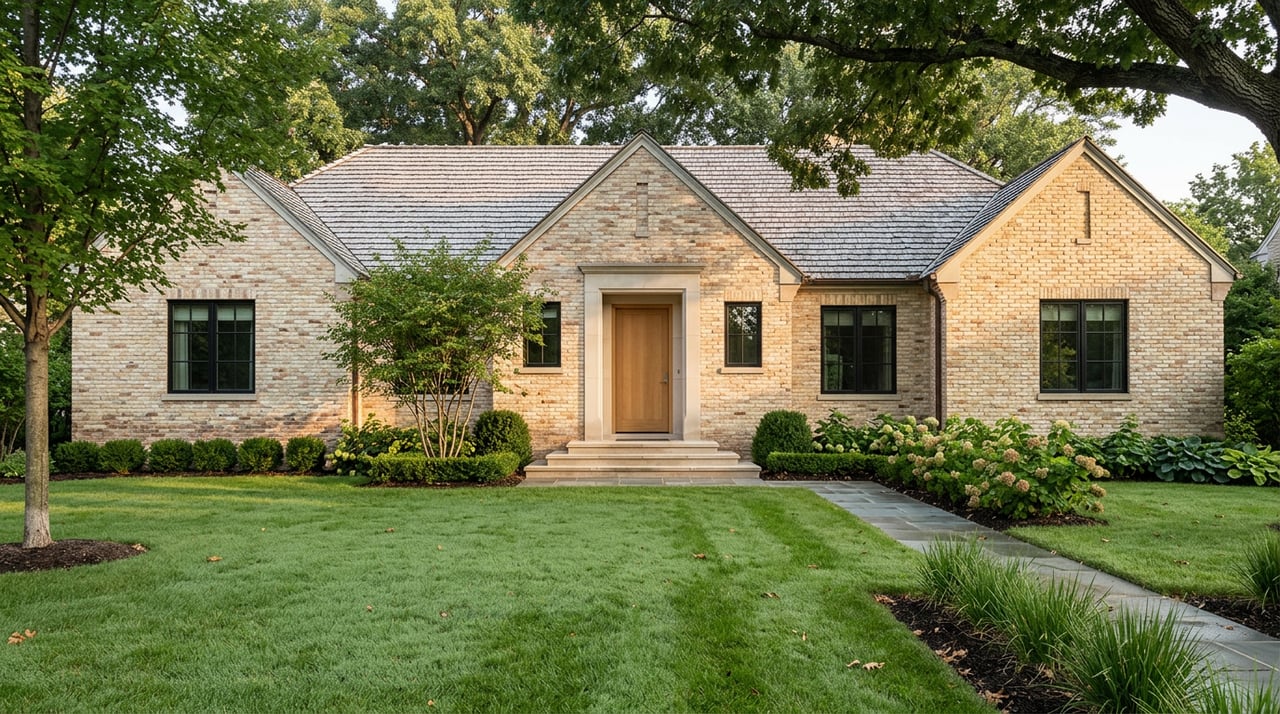
A buyer comparing two Winnetka listings this month will hit a wall that no portal search filter explains. One home near the Metra stop downtown lists at $1.1 million on a lot the size of a tennis court. Ten minutes away by foot, a Tudor on Indian Hill Road asks $6 million and comes with a stretch of golf course view. Both addresses say Winnetka, Illinois. Both fall inside the same school boundaries and the same village limits. The portal's headline number, whatever source it pulled from, cannot explain the gap, because that number was never describing one market. It was averaging three of them.
Winnetka has three Metra stations on the Union Pacific North Line: Winnetka Station downtown at Elm Street, Hubbard Woods to the north, and Indian Hill, serving the golf-course neighborhood of the same name. Each one anchors a different kind of neighborhood, a different era of housing stock, and a different price band. Treat the village as a single number and you will misprice your comparison before you ever tour a house.
Why Winnetka's Market Numbers Differ
Pull Winnetka's numbers from three different sources this summer and you get three different stories. As of March 2026, the village-wide median sale price stood at $1.7 million, up 7 percent year over year, with homes selling in an average of 29 days and drawing about four offers apiece. As of June 30, 2026, the average home value across Winnetka was $1,876,083, up 11.8 percent year over year. A third read, based on May 2026 activity, put the median sale price at $2,247,500 with 48 active listings on the market.
| Source period | Metric | Figure |
|---|---|---|
| March 2026 | Median sale price | $1.7M (up 7.0% YoY) |
| March 2026 | Median $/sq ft | $549 (up 8.7% YoY) |
| May 2026 | Median sale price | $2,247,500 |
| June 2026 | Average home value | $1,876,083 (up 11.8% YoY) |
None of these figures are wrong. They are measuring slightly different things, over slightly different windows, against a housing stock that spans a $285,000 entry point up to a reported $29.9 million estate in East Winnetka. A single median in a market this wide tells you almost nothing about what your budget actually buys until you know which third of the village you are shopping in.
Three Stations, Three Different Housing Stocks
The mechanism behind that spread is geography, and it maps cleanly onto the three stops.
Around the downtown Elm Street station, the housing is the village's oldest and most walkable layer: modest-lot homes on the tree streets, Cape Cods with attached garages, a mix of cottages that predate the commuter-suburb era. This is the zone closest to both the East Elm and West Elm shopping districts, where boutiques, antique dealers, and al fresco dining sit within a short walk of the platform.
Hubbard Woods, a mile or so north, carries a different character. The neighborhood's housing stock was built as early as 1878, with construction continuing in waves through 2014, and Homes by Marco's subdivision data puts current home sizes there between roughly 2,376 and 6,554 square feet. It is denser and more walkable than the village's golf-course pocket, with the Hubbard Woods Design District's Tudor-style storefronts and courtyards forming the retail spine. Zillow's own luxury inventory count for the neighborhood in 2026 ran into the 60s, a sign of how much of Hubbard Woods trades in the upper price bands even though its lots run smaller than the estate parcels around the Indian Hill Club.
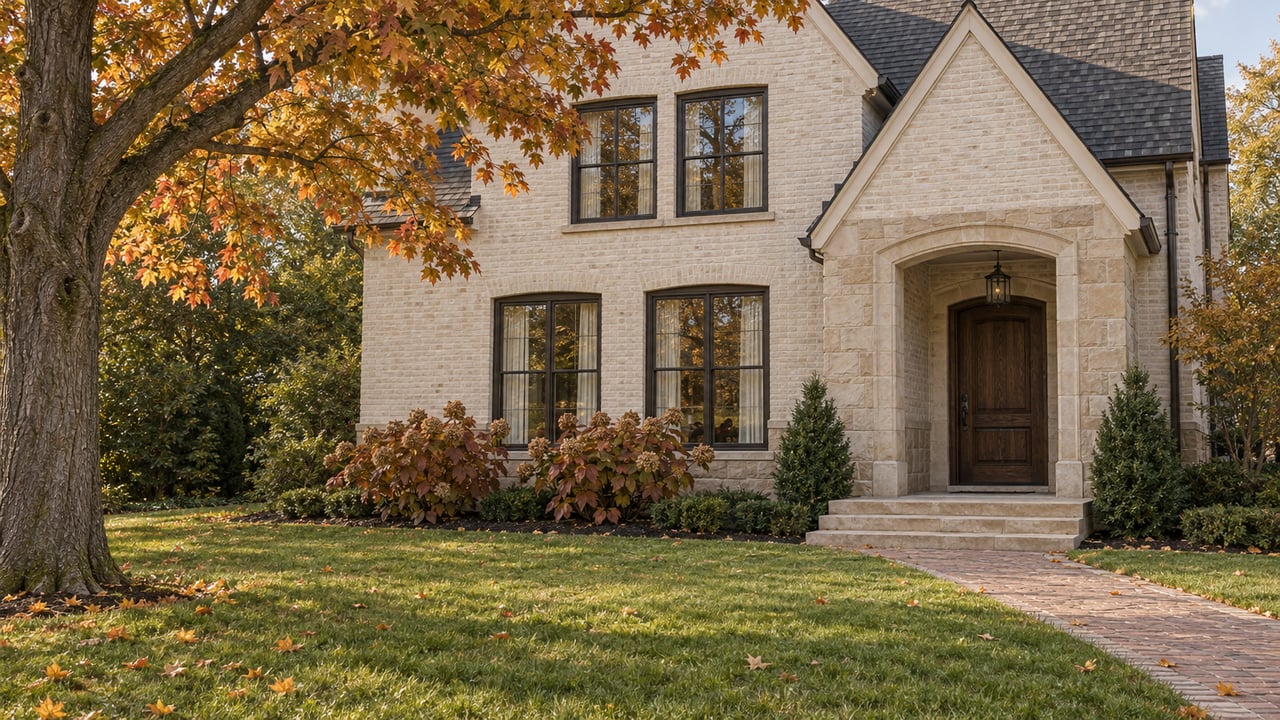
Indian Hill is the outlier. Built up mostly in the 1920s and 1930s around the private Indian Hill Club golf course, the neighborhood is defined by large lots, winding streets, and traditional Tudor and Colonial architecture on parcels that can run close to an acre. A subdivided lot listed this year bordering the golf course ran just under an acre and was marketed on the basis that it was still walkable to the train and downtown, a detail that only makes sense once you understand how differently Indian Hill is laid out compared to the tree streets a mile away.
Three stations. Three lot sizes. Three different eras of construction. That is the actual explanation for why one Winnetka listing and another can differ by five times the price while sharing a zip code.
The Number That Looked Like News But Wasn't
There is a specific trap buyers fall into when they drill down from the village level to a named submarket, and Winnetka's downtown pocket is a clean example of it. One widely used portal reported that the median sale price in the "Downtown Winnetka" submarket jumped 80.4 percent year over year as of September 2025. Read on its own, that looks like the most dramatic story in the entire village.
It almost certainly is not a market signal at all. Village-wide, only a handful of homes trade in any given month, and a submarket cut down to just the downtown blocks trades even fewer. When the sample size for a given month is five or six closings, one estate sale or one unusually small starter home can swing the median by double digits without any change in what the underlying market is actually willing to pay. A percentage swing that large, on a base that thin, is a flag to ask what specifically sold, not a data point to build a pricing strategy on.
What's Changing at the Corner That Anchors Downtown
The downtown submarket is also the one with the clearest reason to expect real change ahead, and it has nothing to do with monthly noise. At the corner of Elm Street and Lincoln Avenue, a four-story mixed-use building called One Winnetka is under construction, with roughly 20,955 square feet of ground-floor retail and up to 59 residential units above it. The project broke ground in 2025 and is targeted for completion by December 2026, with commercial tenants beginning to open in early 2027.
All six of the building's retail spaces are already leased. The anchor is Arkadia, a Mediterranean concept from Ballyhoo Hospitality, the same group behind Pomeroy on Spruce Street since 2021. Arkadia is planned at about 6,700 square feet with seating for 200 inside and another 40 on a patio, built around live-fire cooking and seafood. In February 2026, village trustees approved a small right-of-way agreement for the project after Arkadia's floor plan changed enough that its entry door now sits flush with the building facade rather than recessed, a detail residents who walk that corner weekly are more likely to notice than anyone reading a national listing site.
For a buyer weighing the downtown submarket against Hubbard Woods or Indian Hill, that corner matters. Fifty-nine new residential units and a new dining anchor a short walk from the platform will shift the character and eventually the comparables for the blocks immediately around it, starting in 2027. That is a concrete, dated reason to expect the downtown submarket's profile to keep changing, independent of whatever a single month's median happens to say between now and then.
What This Means If You're Comparing Winnetka Listings
If you are comparing homes across Winnetka, the village median is a starting point, not a pricing tool. The more useful question is which of the three stations you are actually buying near, because that answer predicts more about lot size, architectural era, and walkability than any single village-wide figure can.
A few practical habits follow from that. Ask for the closing comparables from the same submarket, not the village average, and ask how many homes that comparable set is actually built on. Treat any single-month percentage swing in a submarket with real skepticism until you know the sale count behind it. And if you are looking at the downtown pocket specifically, factor in that the corner anchoring it is about to change materially over the next year, which is a different kind of variable than the ones a portal's automated valuation model is built to capture.
None of this is a reason to avoid Winnetka. It is a reason to shop it by neighborhood rather than by headline.
A Few Questions Worth Asking Before You Compare Listings
Why do three different sources show three different price figures for the same village? Each pulls from a different window and a different definition of the underlying data set, and Winnetka's monthly sale volume is thin enough that the choice of window can move the number substantially on its own.
Is Indian Hill always more expensive than Hubbard Woods? Not necessarily. Indian Hill's larger lots and estate-style homes tend to command a premium, but pricing in both neighborhoods depends heavily on the specific property's condition, lot, and proximity to the golf course or the train platform.
When will the One Winnetka retail corner actually open? The building is targeted for completion by December 2026, with the first commercial tenants, including Arkadia, expected to begin opening in early 2027.
If you are trying to figure out which of Winnetka's three train-stop neighborhoods actually fits your budget and your list, that is exactly the kind of block-by-block read Sondra Douglass works through with clients across the North Shore every week. Request a home valuation to start the conversation with real numbers for your specific corner of the village, not the village average.